
. Manufacturing Process: One Machine vs. Two Machines
This is the most fundamental dividing line between the two pvc board for bathroom .
Ordinary PVC skinned foam board (also known as Celuka board or Andy board) only requires one extruder to complete production. The board surface forms a hard skin, while the interior has a foam structure. The process is relatively simple and the cost is lower pvc board for bathroom .
PVC co-extruded board is completely different — it requires two extruders working simultaneously: the main machine extrudes the core layer (foam layer), while the auxiliary machine extrudes the skin layer (non-foam layer). The two materials are combined before fully forming and are co-extruded into the final product. It is precisely this "dual-machine dance" process that gives co-extruded boards far superior comprehensive performance compared to ordinary boards. The complexity of the process also directly increases production costs, which is the core reason why co-extruded boards are significantly more expensive than skinned boards on the market.
2. Surface Texture: Mirror Gloss vs. Matte Frosted
This is the most intuitive way to tell them apart with pvc board for bathroom the naked eye.
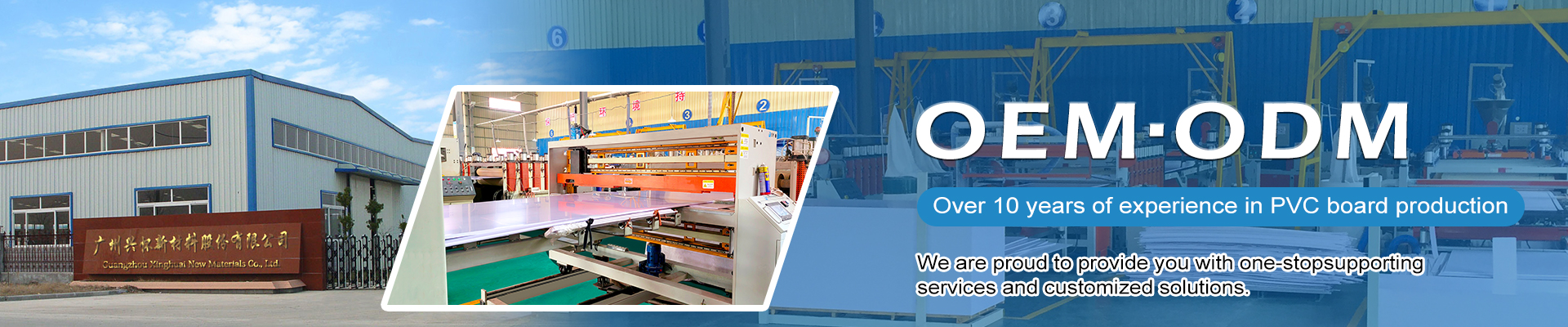
The surface of a PVC co-extruded board is a non-foamed PVC resin layer, smooth as a mirror. It is a high-gloss surface that can clearly reflect images of surrounding objects. The feel is smooth and delicate, and fingernails leave essentially no marks when pvc board for bathroom scratched across it.
Ordinary PVC skinned board, on the other hand, has a foamed hard skin on the surface with a slightly sandy texture. It is a matte surface that cannot reflect objects. The feel is relatively rough and scratches can appear more easily.
To use a vivid analogy: the surface of a pvc board for bathroom co-extruded board is like a mirror that can clearly reflect surrounding objects, while a skinned board is like frosted glass — it has texture but no luster.
3. Hardness and Strength: A Level-Crushing Gap
This is the most critical performance gap between the two, and also the key reason why many merchants pass off skinned boards as co-extruded boards to make huge profits.
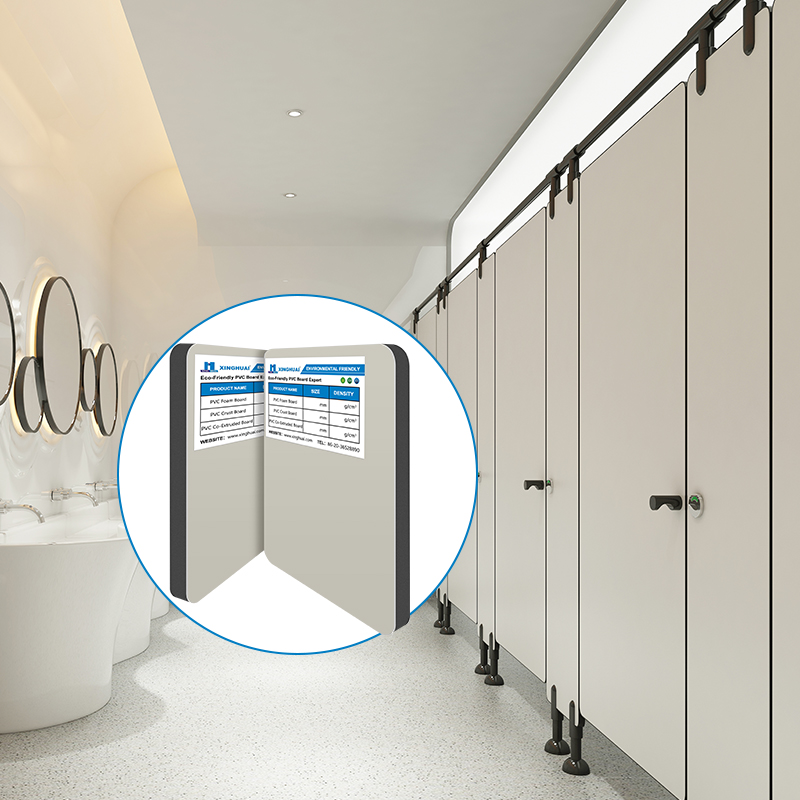
Actual test data shows that the pvc board for bathroom surface hardness of an ordinary skinned board is approximately 55, while the surface hardness of a PVC co-extruded board can reach 75 or above. The hardness of co-extruded boards is far greater than pvc board for bathroom that of skinned boards.pvc board for bathroom What does this mean? It means co-extruded boards have stronger nail-holding power, are less prone to deformation, remain rigid even after slotting and bending, and can be directly used in high-strength scenarios such as kitchen cabinets and bathroom cabinets. Ordinary skinned boards,pvc board for bathroom in these high-demand applications, often fall short and can even lead to substandard project quality.
In addition, co-extruded boards can only be produced with a minimum thickness of 3mm, while ordinary foam boards can be made thinner. With the same density, the thicker the co-extruded board, the higher the surface hardness — this characteristic gives it a particularly prominent advantage in thick-board applications pvc board for bathroom.
4. Lamination Process: High-Temperature Vacuum vs. Room-Temperature Glue
This difference directly affects the product's service life.
The decorative film on ordinary foam boards is bonded directly to the board surface using glue at room temperature. In as little as one to two years, the film layer can easily peel off.
PVC co-extruded boards use a professional vacuum laminating press, bonded under high temperature at 110°C. The film layer and the board become one, making it extremely difficult to peel off.
This is also why co-extruded boards perform far better in scenarios that require long-term appearance retention, such as advertising mounting, UV printing, and similar applications.
5. Paint Treatment: Can vs. Cannot
This is an often-overlooked but extremely critical difference:
Skinned boards can have their appearance improved through paint treatment pvc board for bathroom.
Co-extruded boards, because their surface is too smooth, simply cannot adsorb paint or impurities. Therefore, not only is paint treatment unnecessary, but it is also impossible to perform paint treatment on co-extruded boards pvc board for bathroom.
In other words, co-extruded boards leave the factory in a "finished state" and require no secondary modification, while skinned boards need spraying and other methods to compensate for surface defects.
6. Comprehensive Performance Comparison
In terms of flame retardancy: Co-extruded boards are self-extinguishing when removed from a flame, reaching UL-94 V0 grade with an oxygen index greater than or equal to 45. Ordinary PVC boards also have flame retardancy, but at a slightly lower grade pvc board for bathroom.
In terms of weather resistance: Co-extruded boards incorporate nano-level carbon elements, making the molecular structure more stable. They can be used for over 50 years. Ordinary PVC boards generally show signs of aging in just 3 to 5 years.
In terms of waterproof and moisture resistance: Both perform excellently and have good waterproof and moisture-proof properties.
In terms of insect and pest resistance: Co-extruded boards do not attract insects or ants. Ordinary PVC boards have average pest resistance pvc board for bathroom pvc board for bathroom .
In terms of environmental friendliness: Co-extruded boards pass SGS testing and comply with the EU ROHS 2011/65/EU standard. Ordinary PVC boards meet basic environmental requirements.
In terms of processability: Co-extruded boards can be carved, slotted, bent, UV printed, 3D engraved, and more. Ordinary PVC boards can also be carved and bent, but with slightly less precision.
In terms of applicable temperature rangePapan ekstrusi bersama sesuai untuk suhu dari -50°C hingga 70°C. Papan PVC biasa sesuai untuk suhu dari -15°C hingga 60°C.
7. Senario Aplikasi: Setiap Satu Mempunyai Kekuatannya
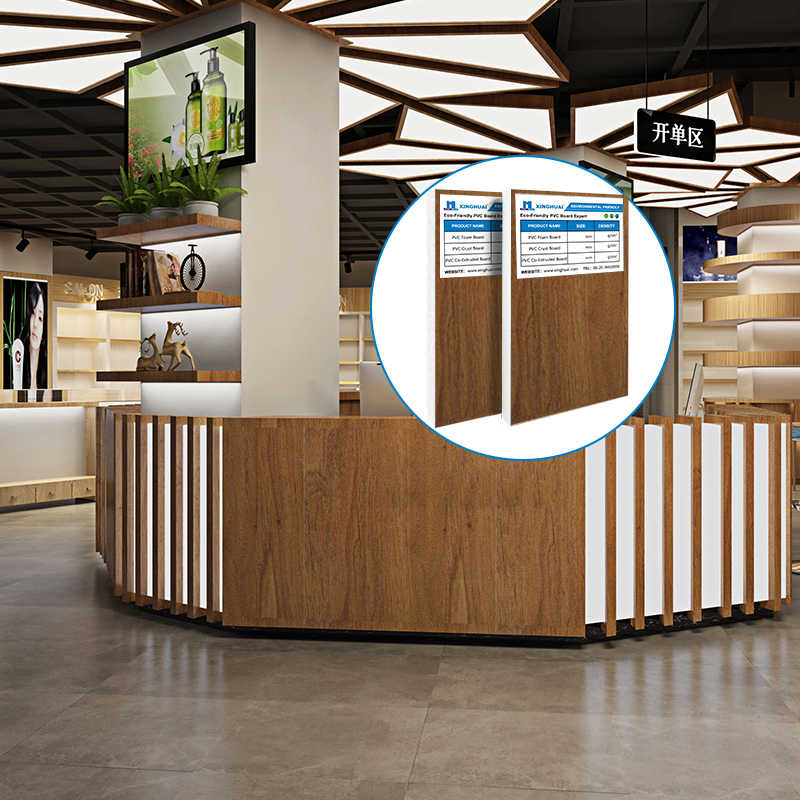
Papan PVC yang diekstrusi bersama, dengan kekerasan yang tinggi, kilauan tinggi dan jangka hayat yang panjang, digunakan secara meluas dalam senario berikut: panel siling bas dan koc, hiasan dalaman kereta api, kabinet dapur mewah, kabinet bilik mandi, almari pakaian, ukiran pengiklanan, percetakan UV, huruf tiga dimensi 3D, panel dinding luaran bangunan, panel dinding penyimpanan sejuk dan kejuruteraan anti-karat kimia.
Papan berkulit PVC biasa dan papan buih percuma lebih sesuai untuk: hiasan dalaman umum, penerbitan pengiklanan mudah, projek kos rendah yang tidak memerlukan kekerasan yang tinggi dan aplikasi jenis nipis (seperti kad papan tanda 1 hingga 3mm, lencana pekerja, dsb.).
Kesimpulan
Papan PVC yang diekstrusi bersama dan papan PVC biasa tidaklah semudah " hanya nama yang berbeza. " Daripada proses penyemperitan bersama dwi-mesin kepada kilauan seperti cermin, daripada kekerasan 75+ kepada jangka hayat perkhidmatan selama 50 tahun — papan yang diekstrusi bersama mencapai kelebihan komprehensif berbanding papan biasa dalam setiap dimensi. Sudah tentu, keseimbangannya ialah kos pengeluaran dan harga jualan yang lebih tinggi.
Semasa membeli, ingat tiga kaedah pengenalpastian pantas: Periksa kilauannya (berkilat bermaksud diekstrusi bersama), uji kekerasannya (tiada kesan daripada kuku bermaksud diekstrusi bersama), dan sahkan laminasinya (ikatan vakum suhu tinggi bermaksud diekstrusi bersama). Jangan biarkan papan yang berkulit menyamar sebagai papan yang diekstrusi bersama, mendapat perbezaan harga anda, dan menjejaskan kualiti projek anda.
